Choose Which Site You Want To See



White Poplar (hedging) - 1 Bare Root Hedging Plant: The rich, dark leaves of White Poplar have a silver/white underside, giving an interesting effect as the tree is ruffled by the wind. A common sight in the English countryside, the White Poplar is used by farmers to provide a windbreak to protect crops. It is also happy to be kept clipped to your required height and width, so it can easily be used as a hedging plant that will rapidly form a dense screen for privacy and security. Supplied as 80 - 100 cm bare roots (31 - 39"&#
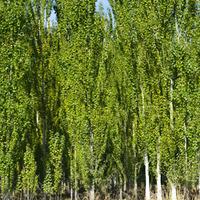
White Poplar (hedging) - 500 Bare Root Hedging Plants: The rich, dark leaves of White Poplar have a silver/white underside, giving an interesting effect as the tree is ruffled by the wind. A common sight in the English countryside, the White Poplar is used by farmers to provide a windbreak to protect crops. It is also happy to be kept clipped to your required height and width, so it can easily be used as a hedging plant that will rapidly form a dense screen for privacy and security. Supplied as 80 - 100 cm bare roots (31 - 39"&#
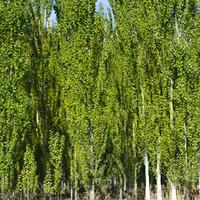
White Poplar (hedging) - 10 Bare Root Hedging Plants: The rich, dark leaves of White Poplar have a silver/white underside, giving an interesting effect as the tree is ruffled by the wind. A common sight in the English countryside, the White Poplar is used by farmers to provide a windbreak to protect crops. It is also happy to be kept clipped to your required height and width, so it can easily be used as a hedging plant that will rapidly form a dense screen for privacy and security. Supplied as 80 - 100 cm bare roots (31 - 39"&#
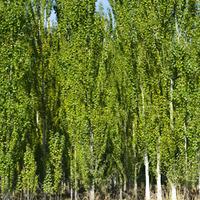
White Poplar (hedging) - 250 Bare Root Hedging Plants: The rich, dark leaves of White Poplar have a silver/white underside, giving an interesting effect as the tree is ruffled by the wind. A common sight in the English countryside, the White Poplar is used by farmers to provide a windbreak to protect crops. It is also happy to be kept clipped to your required height and width, so it can easily be used as a hedging plant that will rapidly form a dense screen for privacy and security. Supplied as 80 - 100 cm bare roots (31 - 39"&#
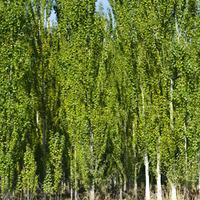
White Poplar (hedging) - 100 Bare Root Hedging Plants: The rich, dark leaves of White Poplar have a silver/white underside, giving an interesting effect as the tree is ruffled by the wind. A common sight in the English countryside, the White Poplar is used by farmers to provide a windbreak to protect crops. It is also happy to be kept clipped to your required height and width, so it can easily be used as a hedging plant that will rapidly form a dense screen for privacy and security. Supplied as 80 - 100 cm bare roots (31 - 39"&#
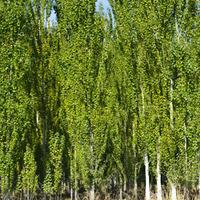
White Poplar (hedging) - 50 Bare Root Hedging Plants: The rich, dark leaves of White Poplar have a silver/white underside, giving an interesting effect as the tree is ruffled by the wind. A common sight in the English countryside, the White Poplar is used by farmers to provide a windbreak to protect crops. It is also happy to be kept clipped to your required height and width, so it can easily be used as a hedging plant that will rapidly form a dense screen for privacy and security. Supplied as 80 - 100 cm bare roots (31 - 39"&#
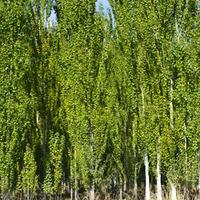
White Poplar (hedging) - 1000 Bare Root Hedging Plants: The rich, dark leaves of White Poplar have a silver/white underside, giving an interesting effect as the tree is ruffled by the wind. A common sight in the English countryside, the White Poplar is used by farmers to provide a windbreak to protect crops. It is also happy to be kept clipped to your required height and width, so it can easily be used as a hedging plant that will rapidly form a dense screen for privacy and security. Supplied as 80 - 100 cm bare roots (31 - 39"&#
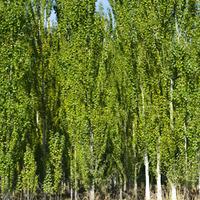
White Poplar (hedging) - 25 Bare Root Hedging Plants: The rich, dark leaves of White Poplar have a silver/white underside, giving an interesting effect as the tree is ruffled by the wind. A common sight in the English countryside, the White Poplar is used by farmers to provide a windbreak to protect crops. It is also happy to be kept clipped to your required height and width, so it can easily be used as a hedging plant that will rapidly form a dense screen for privacy and security. Supplied as 80 - 100 cm bare roots (31 - 39"&#
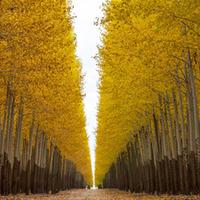
Lombardy Poplar (hedging) - 1 Bare Root Hedging Plant: Poplars are a familiar sight grown as field boundaries, providing an effective windbreak to protect crops. They also make good hedging plants as they will bush out to form an effective screen if they are clipped regularly. The Lombardy Poplar has almost triangular shaped leaves which turn to shades of yellow as autumn progresses. After the leaves have dropped, the beauty of the rough bark is revealed. Beneath the bark is an edible inner bark, which can be eaten like noodles or mixed into flour.

Rowan (hedging) - 1 Bare Root Hedging Plant: With its fine, attractive leaves, clusters of white flowers in spring, and bright orange or red autumn berries, the Rowan is a good-looking choice for a hedging plant. But that's not the only reason for choosing the Mountain Ash. Once established, it is a fast-grower and responds well to being regularly clipped, bushing out to form a nice dense hedge. Sorbus aucuparia is supplied as 60-80cm (24-31") bare root hedging plants. Height: 12m (39?). Spread: 8m
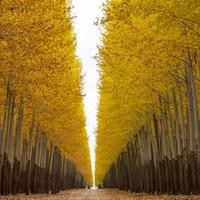
Lombardy Poplar (hedging) - 25 Bare Root Hedging Plants: Poplars are a familiar sight grown as field boundaries, providing an effective windbreak to protect crops. They also make good hedging plants as they will bush out to form an effective screen if they are clipped regularly. The Lombardy Poplar has almost triangular shaped leaves which turn to shades of yellow as autumn progresses. After the leaves have dropped, the beauty of the rough bark is revealed. Beneath the bark is an edible inner bark, which can be eaten like noodles or mixed into flour.
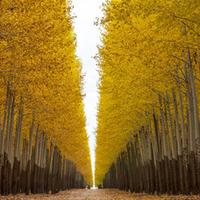
Lombardy Poplar (hedging) - 100 Bare Root Hedging Plants: Poplars are a familiar sight grown as field boundaries, providing an effective windbreak to protect crops. They also make good hedging plants as they will bush out to form an effective screen if they are clipped regularly. The Lombardy Poplar has almost triangular shaped leaves which turn to shades of yellow as autumn progresses. After the leaves have dropped, the beauty of the rough bark is revealed. Beneath the bark is an edible inner bark, which can be eaten like noodles or mixed into flour.
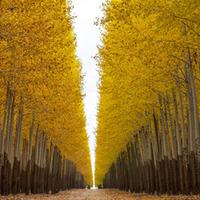
Lombardy Poplar (hedging) - 50 Bare Root Hedging Plants: Poplars are a familiar sight grown as field boundaries, providing an effective windbreak to protect crops. They also make good hedging plants as they will bush out to form an effective screen if they are clipped regularly. The Lombardy Poplar has almost triangular shaped leaves which turn to shades of yellow as autumn progresses. After the leaves have dropped, the beauty of the rough bark is revealed. Beneath the bark is an edible inner bark, which can be eaten like noodles or mixed into flour.
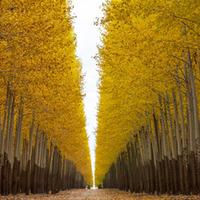
Lombardy Poplar (hedging) - 500 Bare Root Hedging Plants: Poplars are a familiar sight grown as field boundaries, providing an effective windbreak to protect crops. They also make good hedging plants as they will bush out to form an effective screen if they are clipped regularly. The Lombardy Poplar has almost triangular shaped leaves which turn to shades of yellow as autumn progresses. After the leaves have dropped, the beauty of the rough bark is revealed. Beneath the bark is an edible inner bark, which can be eaten like noodles or mixed into flour.
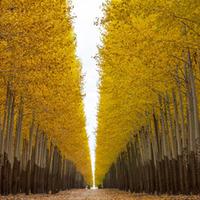
Lombardy Poplar (hedging) - 1000 Bare Root Hedging Plants: Poplars are a familiar sight grown as field boundaries, providing an effective windbreak to protect crops. They also make good hedging plants as they will bush out to form an effective screen if they are clipped regularly. The Lombardy Poplar has almost triangular shaped leaves which turn to shades of yellow as autumn progresses. After the leaves have dropped, the beauty of the rough bark is revealed. Beneath the bark is an edible inner bark, which can be eaten like noodles or mixed into flour.
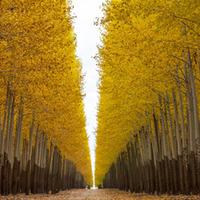
Lombardy Poplar (hedging) - 250 Bare Root Hedging Plants: Poplars are a familiar sight grown as field boundaries, providing an effective windbreak to protect crops. They also make good hedging plants as they will bush out to form an effective screen if they are clipped regularly. The Lombardy Poplar has almost triangular shaped leaves which turn to shades of yellow as autumn progresses. After the leaves have dropped, the beauty of the rough bark is revealed. Beneath the bark is an edible inner bark, which can be eaten like noodles or mixed into flour.
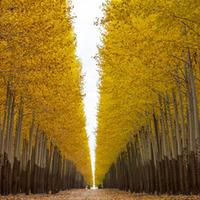
Lombardy Poplar (hedging) - 10 Bare Root Hedging Plants: Poplars are a familiar sight grown as field boundaries, providing an effective windbreak to protect crops. They also make good hedging plants as they will bush out to form an effective screen if they are clipped regularly. The Lombardy Poplar has almost triangular shaped leaves which turn to shades of yellow as autumn progresses. After the leaves have dropped, the beauty of the rough bark is revealed. Beneath the bark is an edible inner bark, which can be eaten like noodles or mixed into flour.

Hornbeam (hedging) - 1 Bare Root Hedging Plant: If you are thinking of planting a native hedgerow, choose Hornbeam as part of the mix. Its impressive qualities include leaves which turn golden yellow in autumn, and fluted, grey coloured branches that look good through the winter. Keep Carpinus betulus to the size you require and it makes a great hedging plant. It is also grown as a large tree. Supplied as 50-80cm (20-31") bare root hedging plants. Height: 12m (39?). Spread: 8m (26?). Planting distance: 45

Hawthorn (hedging) - 1 Bare Root Hedging Plant: Hawthorn is often grown as part of a native hedgerow, where its clusters of white flowers are a distinctive sight in spring. Later in the year these become bunches of red berries, greatly sought after by birds. Hawthorn has another useful quality - with thorny branches it grows into a dense and inpenetrable thicket, making it an excellent choice for a secure boundary. Supplied as 60-90cm (24-35") bare root hedging plants. Height: 8m (26?). Spread: 8m (26?)

Crab Apple (hedging) - 1 Bare Root Hedging Plant: A British native, Crab Apple trees are naturally small and make an ideal hedging plant. In late spring a profusion of white-pink blossoms smother the plant, which are fantastic for bees. These are followed by small yellow-green crab apples which become flushed red and often remain on the tree well after leaf fall. The leaves also take on fiery autumn shades of yellow, orange and red for spectacular late season colour. With high wildlife value, Malus sylvestris is ideal grown as part of...