Choose Which Site You Want To See



Twisted willow, also known as the Corkscrew Willow, is a deciduous tree known for its bizarre, contorted growing habit. Salix babylonica 'Tortuosa' grows quickly, producing stems that twist and turn like a corkscrew - even the leaves do the same! Yellow catkins appear on bare branches in spring,...

Twisted willow, also known as the Corkscrew Willow, is a deciduous tree known for its bizarre, contorted growing habit. Salix babylonica 'Tortuosa' grows quickly, producing stems that twist and turn like a corkscrew - even the leaves do the same! Yellow catkins appear on bare branches in spring,...

Twisted willow, also known as the Corkscrew Willow, is a deciduous tree known for its bizarre, contorted growing habit. Salix babylonica 'Tortuosa' grows quickly, producing stems that twist and turn like a corkscrew - even the leaves do the same! Yellow catkins appear on bare branches in spring,...

Twisted willow, also known as the Corkscrew Willow, is a deciduous tree known for its bizarre, contorted growing habit. Salix babylonica 'Tortuosa' grows quickly, producing stems that twist and turn like a corkscrew - even the leaves do the same! Yellow catkins appear on bare branches in spring,...

Twisted willow, also known as the Corkscrew Willow, is a deciduous tree known for its bizarre, contorted growing habit. Salix babylonica 'Tortuosa' grows quickly, producing stems that twist and turn like a corkscrew - even the leaves do the same! Yellow catkins appear on bare branches in spring,...

Twisted willow, also known as the Corkscrew Willow, is a deciduous tree known for its bizarre, contorted growing habit. Salix babylonica 'Tortuosa' grows quickly, producing stems that twist and turn like a corkscrew - even the leaves do the same! Yellow catkins appear on bare branches in spring,...

Twisted willow, also known as the Corkscrew Willow, is a deciduous tree known for its bizarre, contorted growing habit. Salix babylonica 'Tortuosa' grows quickly, producing stems that twist and turn like a corkscrew - even the leaves do the same! Yellow catkins appear on bare branches in spring,...

Golden Weeping Willow is an excellent choice for a hedge on ground that is often waterlogged, or boggy. It quickly settles in and makes an attractive boundary. Salix chrysocoma has a dense form that makes it an effective screen; in winter its bare stems still provide a barrier and are a golden...

Scarlet Willow has all of the characteristics you would expect from this species, with the added bonus of bright red young stems in winter. Scarlet willow adapts well to being part of a hedgerow, and regular clipping encourages more red shoots to grow. Tolerant of flooding, willows are an ideal...

Twisted willow, also known as the Corkscrew Willow, is a deciduous tree known for its bizarre, contorted growing habit. Salix babylonica 'Tortuosa' grows quickly, producing stems that twist and turn like a corkscrew - even the leaves do the same! Yellow catkins appear on bare branches in spring,...

With its fine, attractive leaves, clusters of white flowers in spring, and bright orange or red autumn berries, the Rowan is a good-looking choice for a hedging plant. But that's not the only reason for choosing the Mountain Ash. Once established, it is a fast-grower and responds well to being...

If you are thinking of planting a native hedgerow, choose Hornbeam as part of the mix. Its impressive qualities include leaves which turn golden yellow in autumn, and fluted, grey coloured branches that look good through the winter. Keep Carpinus betulus to the size you require and it makes a great...
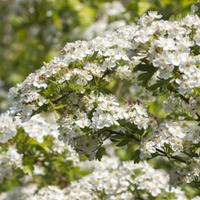
Hawthorn is often grown as part of a native hedgerow, where its clusters of white flowers are a distinctive sight in spring. Later in the year these become bunches of red berries, greatly sought after by birds. Hawthorn has another useful quality - with thorny branches it grows into a dense and...

The most traditional of British native trees, Oak is easily recognised by its distinctive leaves and acorns. Its robust growth and branching habit mean that it can be grown successfully as part of a mixed hedgerow or planted as an Oak hedge. It will quickly form a dense screen and be a haven for...

Golden Weeping Willow is an excellent choice for a hedge on ground that is often waterlogged, or boggy. It quickly settles in and makes an attractive boundary. Salix chrysocoma has a dense form that makes it an effective screen; in winter its bare stems still provide a barrier and are a golden...

Golden Weeping Willow is an excellent choice for a hedge on ground that is often waterlogged, or boggy. It quickly settles in and makes an attractive boundary. Salix chrysocoma has a dense form that makes it an effective screen; in winter its bare stems still provide a barrier and are a golden...

Golden Weeping Willow is an excellent choice for a hedge on ground that is often waterlogged, or boggy. It quickly settles in and makes an attractive boundary. Salix chrysocoma has a dense form that makes it an effective screen; in winter its bare stems still provide a barrier and are a golden...

Golden Weeping Willow is an excellent choice for a hedge on ground that is often waterlogged, or boggy. It quickly settles in and makes an attractive boundary. Salix chrysocoma has a dense form that makes it an effective screen; in winter its bare stems still provide a barrier and are a golden...

Golden Weeping Willow is an excellent choice for a hedge on ground that is often waterlogged, or boggy. It quickly settles in and makes an attractive boundary. Salix chrysocoma has a dense form that makes it an effective screen; in winter its bare stems still provide a barrier and are a golden...

Golden Weeping Willow is an excellent choice for a hedge on ground that is often waterlogged, or boggy. It quickly settles in and makes an attractive boundary. Salix chrysocoma has a dense form that makes it an effective screen; in winter its bare stems still provide a barrier and are a golden...

Scarlet Willow has all of the characteristics you would expect from this species, with the added bonus of bright red young stems in winter. Scarlet willow adapts well to being part of a hedgerow, and regular clipping encourages more red shoots to grow. Tolerant of flooding, willows are an ideal...

Scarlet Willow has all of the characteristics you would expect from this species, with the added bonus of bright red young stems in winter. Scarlet willow adapts well to being part of a hedgerow, and regular clipping encourages more red shoots to grow. Tolerant of flooding, willows are an ideal...

Scarlet Willow has all of the characteristics you would expect from this species, with the added bonus of bright red young stems in winter. Scarlet willow adapts well to being part of a hedgerow, and regular clipping encourages more red shoots to grow. Tolerant of flooding, willows are an ideal...

Scarlet Willow has all of the characteristics you would expect from this species, with the added bonus of bright red young stems in winter. Scarlet willow adapts well to being part of a hedgerow, and regular clipping encourages more red shoots to grow. Tolerant of flooding, willows are an ideal...

Scarlet Willow has all of the characteristics you would expect from this species, with the added bonus of bright red young stems in winter. Scarlet willow adapts well to being part of a hedgerow, and regular clipping encourages more red shoots to grow. Tolerant of flooding, willows are an ideal...

Scarlet Willow has all of the characteristics you would expect from this species, with the added bonus of bright red young stems in winter. Scarlet willow adapts well to being part of a hedgerow, and regular clipping encourages more red shoots to grow. Tolerant of flooding, willows are an ideal...
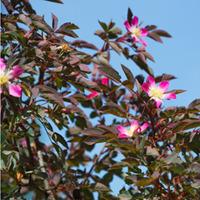
The Red Leaf Rose is a great choice for hedging for several reasons, not least its natural beauty. With its pretty pink flowers and purple-grey leaves, it stands alone as a beautiful specimen plant, or adds a touch of colour to the mix when grown with other hedging plants. It provides security,...
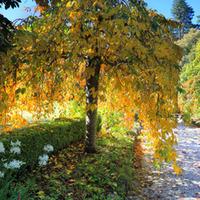
Silver birch makes an attractive addition to a native hedging scheme. Its delicate stems and twigs form a dense screen, even when bare in winter. Brown catkins hang down in late spring and summer, against the back drop of leaves, adding extra interest - and of course the silver/white coloured bark...
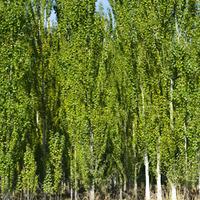
The rich, dark leaves of White Poplar have a silver/white underside, giving an interesting effect as the tree is ruffled by the wind. A common sight in the English countryside, the White Poplar is used by farmers to provide a windbreak to protect crops. It is also happy to be kept clipped to your...
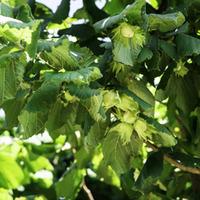
Well known as a tree grown for its Cobnuts or Hazelnuts, Corylus avellana is also a fantastic hedging plant. Elegant yellow catkins hang gracefully along the bare branches in early spring, followed by large, rounded green leaves which turn to buttery yellow in autumn. Less formal pruning will allow...

Poplars are a familiar sight grown as field boundaries, providing an effective windbreak to protect crops. They also make good hedging plants as they will bush out to form an effective screen if they are clipped regularly. The Lombardy Poplar has almost triangular shaped leaves which turn to shades...

The English Yew has been awarded a prestigious RHS Award of Garden Merit and is ideal for growing as a formal hedge - it tolerates regular clipping and is easily shaped for topiary. A good all round tough plant that is tolerant of dry soils, this Taxus baccata is a medium-sized bushy evergreen tree...
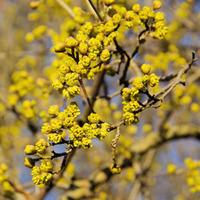
The Cornelian Cherry can be relied upon to give you an early glimpse of spring when you need it most. Cornus mas starts the season with clusters of bright yellow flowers on bare stems in early spring to show that the grey days are almost over and summer is on the way. Each little flower will turn...
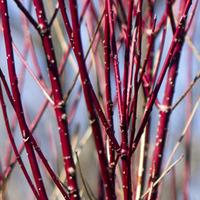
Usually grown as an ornamental shrub for its winter stem colour, Red Dogwood also makes a brilliant hedging plant. The strong upright stems produce bright green ovate leaves and clusters of tiny white flowers in May and June which are attractive to bees. In autumn the leaves take on warm shades of...

A British native, Crab Apple trees are naturally small and make an ideal hedging plant. In late spring a profusion of white-pink blossoms smother the plant, which are fantastic for bees. These are followed by small yellow-green crab apples which become flushed red and often remain on the tree well...
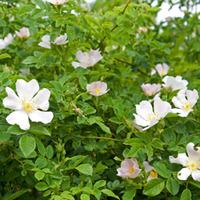
A pretty British native shrub, the dog rose produces open white flowers blushed with pink in early summer. These are followed by glossy bright red rose hips in autumn which are beloved by birds and small mammals. A vigorous arching habit makes Rosa canina ideal for hedging along garden boundaries...
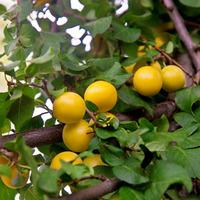
The Cherry Plum or Myrobalancan be often seen in autumn hedgerows as the golden yellow and deep red miniature round plums catch the eye as they are highlighted against the dark green foliage. The perfect hedging for wildlife, Prunus ceraifera is clothed in pristine white flowers during March and...
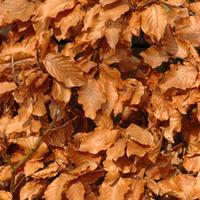
Hedging needn't be just in shades of green, consider Fagus sylvatica, a classic copper beech instead. Copper beech is easy to care for as it just needs clipping once or twice a year to maintain it's density and overall shape. It's natural habit is to form a thick hedge as it's branches intertwine...

Laurel is a well known hedging plant species and the Cherry Laurel in particular demonstrates the many reasons why they are so popular. Prunus laurocerasus 'Rotundifolia' is a worthy RHS AGM winner, awarded in part for it's large glossy leaves and the elegant creamy white flower spikes that form in...

Prunus spinosa is better known as a Sloe or Blackthorn bush when naturalised in hedgerows. Blackthorn is named for it's small round black berries that are used to make Sloe gin and for the thorns which, along with dense foliage make the plant perfect for security hedging. A further attraction are...